Bold Simplification in Health.
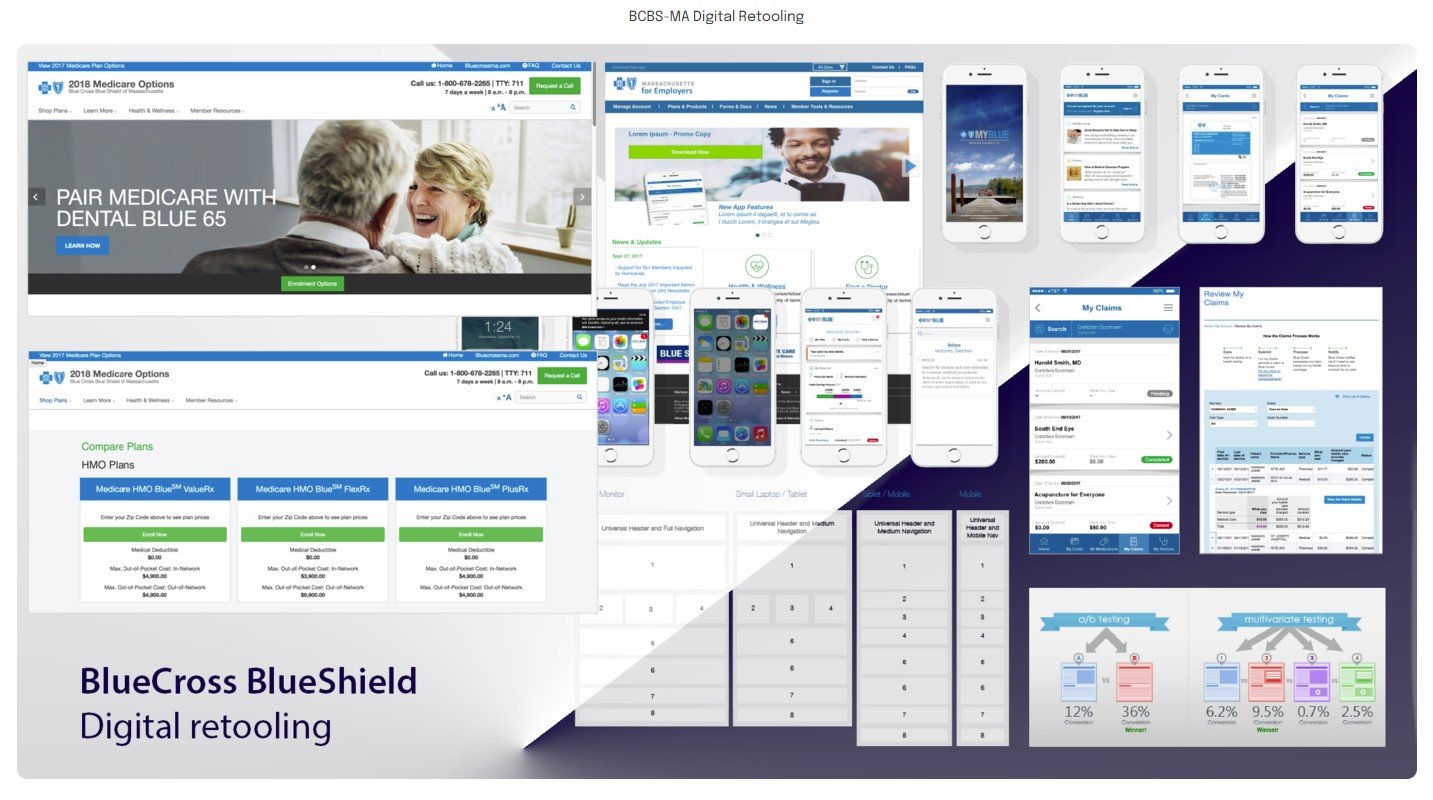
BCBSMA reimagined the digital landscape. This project was a masterpiece of digital strategy and execution until it hit the legacy server infrastructure. Transforming a fragmented digital landscape of 1,200+ legacy sites into a unified, high-performing healthcare ecosystem.
As the Principal UX Architect - Acting Head of UX, we built a molecular design system from the ground up, ensuring 508/WCAG compliance wasn't an afterthought—it was the foundation.
BCBSMA: Enterprise UX Transformation
Role: Principal UX Architect, Acting Head of UX
Location: Boston, MA (Hybrid)
Team Size: 7 Designers across five Enterprise Pods
🌐 The Core Mission
The Challenge: Transform a fragmented digital landscape of 1,200+ legacy sites into a unified, high-performing healthcare ecosystem.
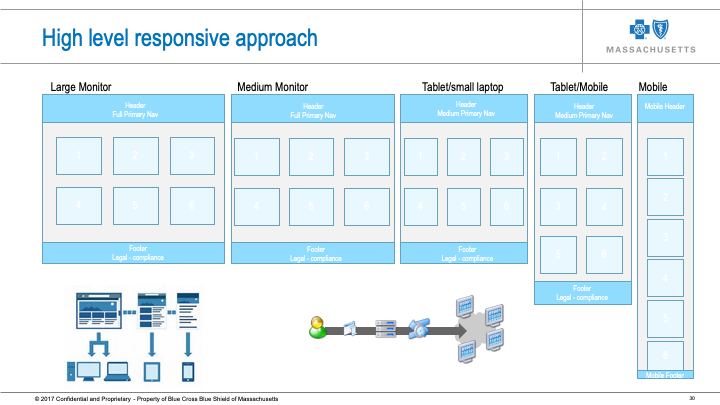
The Solution: I served as the Principal UX Architect, building a molecular design system from the ground up. We implemented a headless, dynamic web architecture that adapted to every device and monitor need, ensuring $508/WCAG$ compliance wasn't an afterthought—it was the foundation.
The Impact: Consistently reduced a massive, broken navigation system into an intuitive, device-agnostic masterpiece. We didn't just update the UI; we modernized the entire healthcare experience for B2B, B2C, and Medicare segments.
This is not just a design project; it’s the blueprint for institutionalizing UX as a strategic function. Establishing a centralized, scalable UX organization includes:
1. Shift to Agile Lean UX
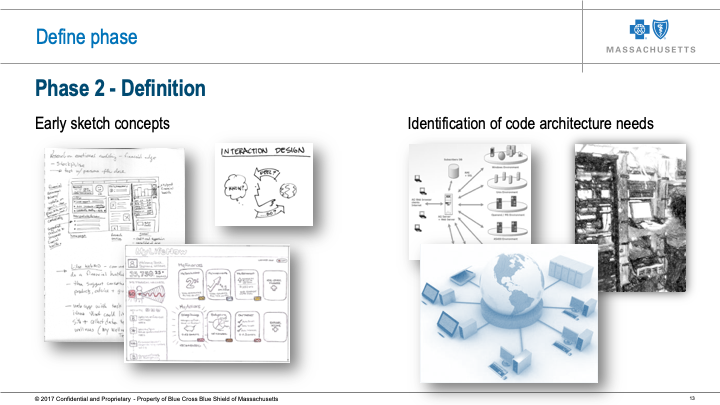
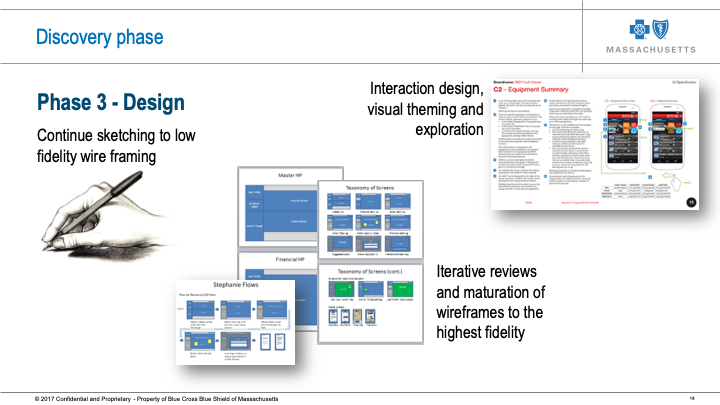
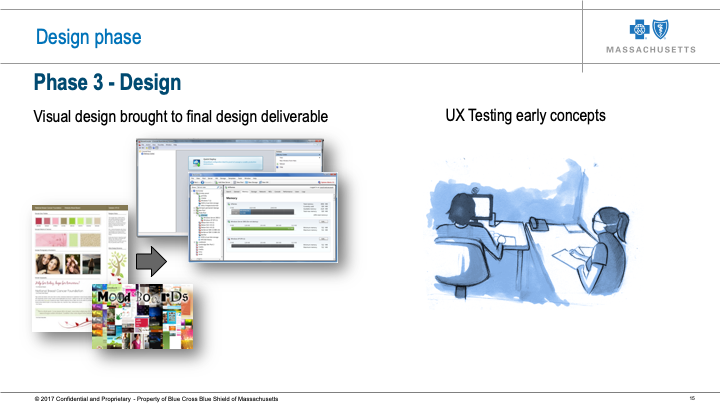
Lean UX Process: Implement a clear lifecycle: Discovery → Define → Design → Sprint → Optimize.
Forward-Looking Design: Ensure the UX team operates three sprints ahead of development to prevent reactive, feature-only design work.
Sprint 0: Introduce a foundational phase for high-level ecosystem thinking before feature work begins.
2. Establish a Unified Global Design Language
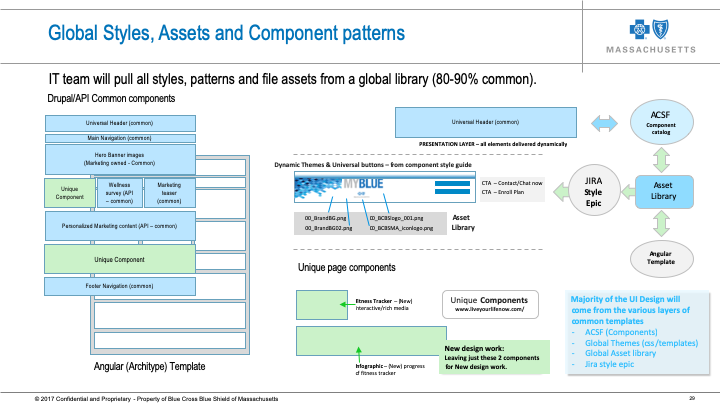
Centralized System: Build a global design system using tools like UXPin, Drupal, and Angular.
Scalable Frameworks: Develop dynamic themes, responsive grids, and universal navigation patterns.
Governance: Create a shared asset library with strict naming conventions and maintenance rules.
3. Create a Smart Component Ecosystem
Component Catalog: Develop a reusable widget library to reduce redundant work.
Deep-Linked Specs: Integrate design assets directly with Jira and Confluence for seamless handoffs.
Cross-Platform Modules: Build reusable components that work across diverse properties like Medicare, marketing sites, and logged-in member portals.
4. Build a Research and Discovery Foundation
User Intelligence: Institutionalize the use of journey maps, personas, and competitive analysis.
Centralized Knowledge: Maintain a Research Wiki to serve as a hub for organizational insights.
Exploratory Research: Move beyond feature testing to foundational user research.
5. Define Digital Taxonomy & Ecosystem
Unified IA: Establish a cross-site taxonomy that connects public "Find & Shop" experiences with logged-in "Manage MyBlue" portals.
Consistency: Ensure a coherent experience across different business channels, including B2B, Providers, and Medicare.
This shift is essential to stop the cycle of inconsistent UI and siloed feature design.
🧩 Organizational Challenges the UX Department Must Solve
🔹 Fragmented UX
Teams currently design micro‑features without end‑to‑end visibility. This leads to:
Inconsistent patterns
Redundant components
UI debt
Conflicting design decisions across teams
🔹 Understaffing
The document repeatedly notes:
Designers are over capacity
Visual design support is insufficient
GUX tools need dedicated owners
Multiple major initiatives lack staffing
Standing up a UX department requires hiring, training, and defining roles.
🔹 Lack of Design Governance
There is no:
Centralized style guide
Component governance
Asset management strategy
Cross‑team design QA process
The new UX org must implement design QA, UAT signoff, and governance workflows.
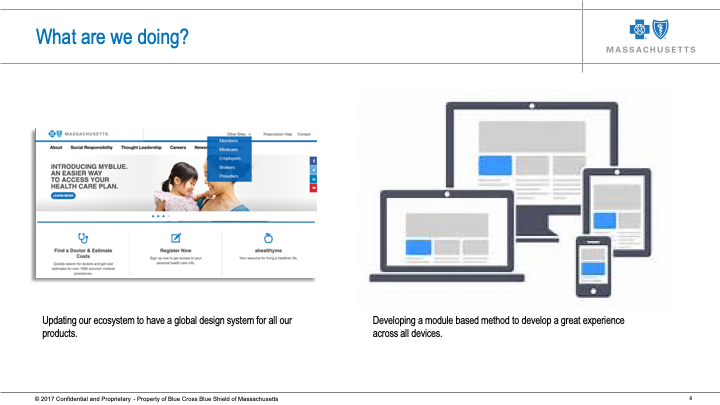
My role as Principle Designer, changed to Design Director, and the Product, Tech and Design teams, developed a plan to match the above. Consolidating the fragmented business teams and design resources across a legacy structure were quickly realigned to fall into one of 5 channels (B2b, Providers, Customers, Medicare and User Health).
So we do rapid design on new products and sites, and develop a prioritized list to rebuild legacy in a sandbox. Hiring and Design systems teams were also rolled up under me.
🛠️ What the UX Department Must Build
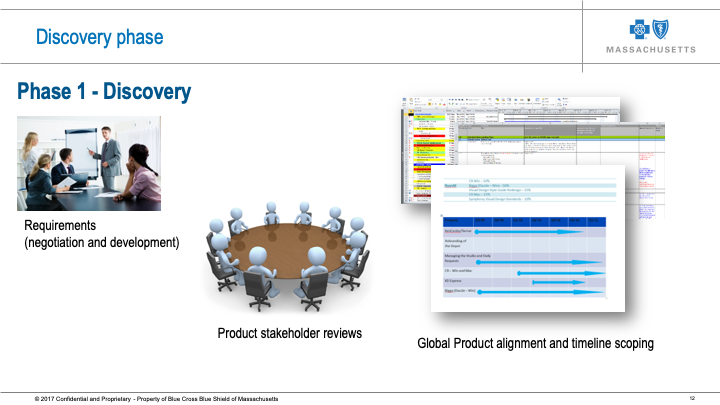
1. A Design System
Templates
Components
Widgets
Dynamic themes
Brand & style guides
Asset libraries
ADA‑compliant responsive patterns
2. A UX Process Framework
Discovery → Define → Design → Sprint → Optimize
Sprint 0 for ecosystem‑level design
Clear deliverables: wires, comps, specs, content decks, prototypes
3. A Tooling Ecosystem
Jira design stream
Confluence research wiki
Drupal component catalog
UXPin design libraries
4. A Governance Model
Deep‑linking specs
Story alignment
Design QA & signoff
Cross‑product consistency rules
🧠 The Vision: A Mature, Scalable UX Organization
The document paints a clear vision of what BCBSMA needs from its UX department:
A centralized design authority that defines the digital ecosystem
A component‑driven, atomic design approach
A research‑informed, user‑centered culture
A repeatable, scalable design process
A cross‑functional partner to product and engineering
A strategic force that shapes the future of BCBSMA digital experiences
This is the blueprint for transforming BCBSMA into a design‑mature organization with UX as a core competency.